

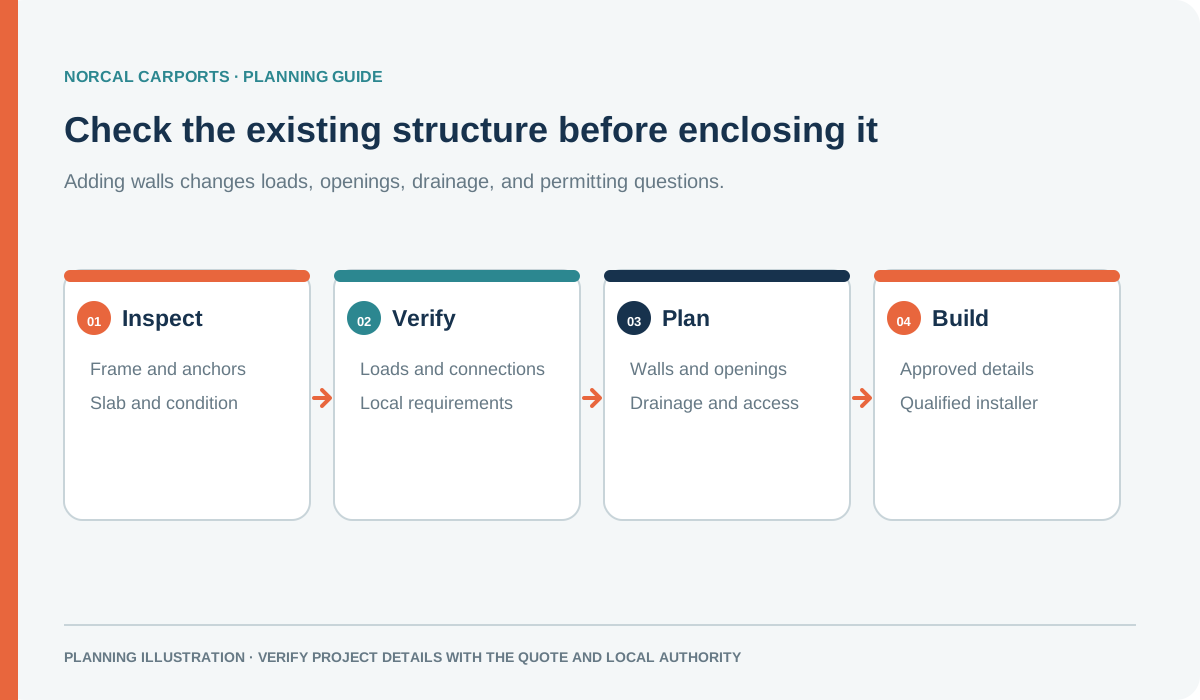
Figure note: Conceptual sequence, not an approval to modify an existing structure.
How to turn a carport into a garage
- Gather the records. Find the original plans, permits, and manufacturer information, and photograph the frame, connections, anchors, and base.
- Get the structure reviewed. Ask a qualified designer or engineer whether the frame and foundation can support walls and doors.
- Ask about permits. Check the local building department's requirements before buying panels or scheduling work.
- Compare a retrofit with a new building. Replacing the structure may be more practical if the frame, foundation, or records fall short.
- Get a written scope. Separate engineering, permit documents, wall and door materials, structural changes, foundation work, electrical work, and installation.
- Build to the approved plans. Complete any required inspections with the city or county.
Do you need a permit to enclose a carport?
Ask your local building department before you start. Adding walls and doors can trigger permit, zoning, and engineering review, even if the open carport did not need one.
Check the structure before planning walls
Start by finding the original plans, manufacturer information, installation records, and any permit documents. If those are unavailable, record the existing dimensions and take clear photos of the posts, roof framing, bracing, connections, anchors, base, and surrounding grade. Note visible corrosion, movement, damage, or water drainage problems.
A qualified designer or engineer can assess whether the existing frame and foundation suit the proposed enclosure. The review may need to consider the added wall area, door openings, bracing, connection details, and how loads reach the foundation. Do not cut, move, or add structural members based on a generic sketch.
Ask the local building department what it requires
Permit and zoning requirements depend on the property and jurisdiction. Before buying panels or scheduling work, ask the local building department about permits, setbacks, lot coverage, fire separation, drainage, inspections, and required plans or calculations. The California Building Standards Commission lists the current Title 24 code edition; your city or county can explain which provisions and local amendments apply to your project.
Enclosing a carport can also change how the building is used. Confirm whether the proposed doors, ventilation, electrical work, and any planned workshop or storage use trigger additional requirements.
Compare a retrofit with a new enclosed building
A retrofit may be workable when the existing structure is in good condition and the project team confirms the frame, connections, and foundation can support the proposed changes. It may be more practical to replace it when key documents are missing, the frame is damaged, the foundation is unsuitable, or the changes needed are extensive. A site-specific review is needed to make that comparison; appearance alone is not enough.
Ask each contractor to separate inspection or engineering, permit documents, wall and door materials, structural modifications, foundation work, electrical work, and installation. Compare complete written scopes rather than pricing only the wall panels.
Before you request a quote
Prepare the property address, existing plans or permits, photos, approximate dimensions, foundation or surface details, preferred door and window locations, intended use, and the local department’s checklist. Also describe drainage, access, and any utilities that cross the work area. Those details help the project team identify questions before the quote is finalized.
For a new enclosed option, compare metal garages and the guide to generic plans versus site-specific plans. For permit planning, see the California carport permit guide. If the existing structure is still a good candidate, request a project quote that clearly states the inspection, engineering, permit, and construction scope.
Buyer Path
Compare Next
Use these existing pages to turn the article idea into product fit, planning details, and a quote path.
Product
Metal Garages
Compare enclosed steel garage options for vehicles, tools, workshops, and storage.
Example
24 x 30 x 10 Metal Garage
Review a practical enclosed garage example with bay space.
Planning
Steel Garages Resource
Understand wall panels, doors, protection, and structural planning for garages.
Permit
Permit Requirements
Check how enclosure, size, foundation, and local rules affect approval.

Mike Ruiz
Founder & Steel Structures Expert Northern California
Mike Ruiz started Norcal Carports to help customers compare steel-building options, prepare accurate order details, and coordinate delivery and installation with the manufacturer.
